

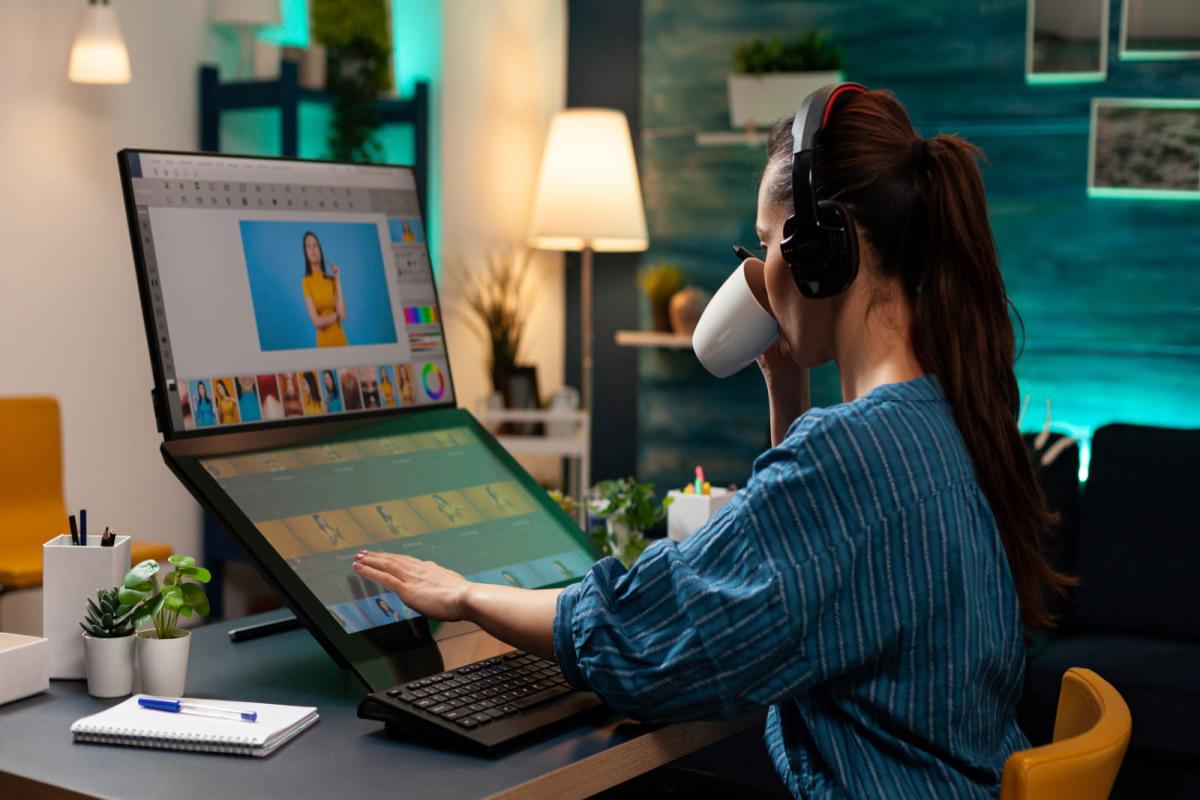
How Graphic Design Helps Business Growth in 2026
In today’s hyper-competitive digital world, businesses are no longer judged only by what they sell — they are judged by how they present themselves. From the moment a user lands on your website or scrolls past your ad, visual design determines whether they stay, engage, or leave.
This is where graphic design for business growth becomes a critical factor.
Modern consumers are exposed to thousands of marketing messages daily, leaving businesses only a few seconds to make a strong first impression. In this environment, design is not just about aesthetics — it is about clarity, communication, and conversion. A strong design also supports better on-page SEO performance, helping your website rank higher and attract the right audience.
A well-designed brand communicates professionalism, builds trust, and influences decision-making, while poor design creates confusion and reduces credibility.
The importance of graphic design in marketing has grown rapidly due to:
- Increased competition across industries
- Rise of digital platforms and social media
- Growth of visual-first content consumption
- Expansion of e-commerce and online services
In 2026, businesses that invest in strategic design are not just creating visuals — they are building experiences that drive measurable results. This guide will walk you through everything you need to know about graphic design and its impact on business growth, including principles, trends, data insights, and practical strategies.
Graphic Design Industry Statistics & Business Trends (2026)
In 2026, graphic design is no longer treated as a supporting creative function — it has evolved into a core business investment directly linked to growth, performance, and competitive positioning. Businesses across industries are increasingly recognizing that design is not just about aesthetics but about influencing customer perception, improving engagement, and driving measurable results.
Recent industry data clearly highlights this shift. Nearly 90% of businesses now rely on graphic design in some capacity, making it one of the most widely adopted functions in modern business operations. At the same time, the rise of automation and AI has not reduced the importance of design — instead, it has expanded its role. Around 88% of businesses are already using AI design tools, but only a small percentage report a reduced need for designers, indicating that human creativity and strategic thinking still remain irreplaceable.
One of the strongest indicators of design’s growing importance is budget allocation. Over the past year, nearly 47% of businesses have increased their design budgets, while a large percentage of others have maintained their spending. This trend reflects a growing understanding that investment in design leads to better marketing performance, stronger brand positioning, and higher customer engagement.
The overall market size further supports this growth trajectory. The global graphic design market is projected to reach over $59 billion in 2026, with steady growth expected in the coming years due to increasing demand for digital content and visual communication.
This growth is largely driven by:
- Expansion of digital marketing channels
- Rise of social media and content-driven platforms
- Growth of e-commerce businesses
- Increased demand for consistent brand identity
Another key trend shaping the industry is the explosion of visual content demand. More than 50% of businesses report increased demand for social media creatives, making it one of the fastest-growing areas in design. As brands compete for attention across platforms like Instagram, YouTube, and LinkedIn, high-quality visuals have become essential for standing out and engaging audiences.
In terms of business impact, graphic design is now directly tied to performance metrics. Around 31% of businesses say design has the biggest impact on advertising performance, while approximately 30% link it to improved social media engagement. This clearly shows that design is not just a creative output — it is a revenue-driving asset.
Another major shift in 2026 is the integration of AI into design workflows. Businesses are increasingly using AI for tasks such as:
- Image editing and background removal
- Generating social media creatives
- Creating design variations for ads
- Rapid prototyping and concept generation
However, AI is primarily used for execution and speed, not strategy. Studies show that AI is mostly replacing repetitive or low-level tasks, while core brand design, storytelling, and strategic creativity remain human-led.
Additionally, hiring trends indicate that demand for designers is still strong — and in some cases, increasing. Many companies are now hiring designers not just for execution but for strategic input, creative problem-solving, and performance-driven design thinking. In fact, research suggests that AI is actually driving renewed demand for skilled designers, as businesses need professionals who can guide and refine AI-generated outputs.
Another important shift is how businesses approach design operations. Instead of treating design as a one-time project, companies are now integrating it into ongoing workflows. Many organizations:
- Maintain in-house design teams for consistency
- Work with freelancers for flexibility
- Partner with agencies for strategic and large-scale execution
This hybrid approach allows businesses to scale their design efforts while maintaining quality and consistency.
Looking ahead, the future of graphic design will continue to be shaped by three key forces:
- AI and automation improving efficiency and scalability
- Growing demand for personalized and visual-first content
- Increased focus on measurable business outcomes
In simple terms, the role of graphic design has evolved from “making things look good” to driving business growth, improving performance, and creating competitive advantage.
For businesses in 2026, the message is clear:
Investing in design is no longer optional — it is essential for survival and success.
What Is Graphic Design in Business?
Graphic design in business refers to the strategic use of visual elements such as colors, typography, images, icons, and layouts to communicate messages and influence customer behavior.
It plays a role across multiple business functions, including:
- Branding and identity creation
- Marketing and advertising
- Website and user interface design
- Product packaging
- Social media communication
The purpose of graphic design is not just to make content visually appealing — it is to make it effective.
Good design helps:
- Simplify complex information
- Guide user attention
- Create emotional connections
- Encourage action
In essence, graphic design acts as a bridge between your business and your audience. It ensures that your message is not only seen but also understood and remembered.
Why Graphic Design Is Important for Business Growth
1. Builds a Strong Brand Identity
A strong brand identity is essential for standing out in a crowded market. Graphic design helps create a consistent visual language that represents your business across all platforms. Investing in professional graphic designing services ensures your brand maintains consistency across all platforms.
Elements like logos, color schemes, and typography become symbols of your brand. Over time, these elements create recognition and familiarity.
When customers can instantly recognize your brand, it increases trust and improves recall.
2. Creates First Impressions That Matter
Research shows that users form an opinion about a website or brand within seconds. This initial impression is heavily influenced by design.
A clean, modern, and professional design builds confidence, while outdated or cluttered visuals create doubt.
First impressions directly impact:
- Bounce rates
- Engagement
- Conversion rates
3. Improves Customer Trust and Credibility
Trust is one of the most important factors in customer decision-making. Graphic design plays a key role in building that trust.
Professional visuals signal that your business is reliable and detail-oriented. Poor design, on the other hand, can make your business appear untrustworthy.
Customers are more likely to engage with brands that look credible and consistent.
4. Enhances User Experience (UX)
User experience is a major ranking factor for search engines, and it plays a crucial role in both design and search engine optimization strategies.
Good design improves:
- Navigation
- Readability
- Accessibility
- Interaction
When users find it easy to interact with your website or app, they are more likely to stay longer and take action.
5. Increases Conversion Rates
Graphic design plays a direct role in influencing user behavior.
Strategic use of:
- Visual hierarchy
- Call-to-action buttons
- Color contrast
- Layout structure
can guide users toward desired actions such as signing up, clicking, or purchasing.
Even small design improvements can lead to significant increases in conversion rates.
6. Strengthens Marketing Performance
Every marketing campaign depends on visuals, especially when combined with the right digital marketing strategy to maximize reach and engagement. Whether it’s a Facebook ad, email campaign, or landing page, design determines how effective your message will be.
Strong visuals:
- Capture attention
- Communicate value quickly
- Encourage engagement
Now let’s understand how design directly impacts business performance.
How Graphic Design Drives Measurable Business Results
Graphic design has a direct and measurable impact on business performance across the entire customer journey. From increasing click-through rates and improving conversions to strengthening brand recall, design influences how users engage and take action.
When applied strategically, graphic design becomes a key driver of revenue, engagement, and long-term business growth.
Improves Advertising Performance and ROI
Advertising is one of the most competitive areas in digital marketing, where businesses fight for limited user attention. In such an environment, design becomes the deciding factor between an ad that performs and one that gets ignored.
Well-designed ads:
- Capture attention instantly
- Communicate the message clearly
- Create emotional appeal
- Encourage user action
Studies show that a significant percentage of businesses identify graphic design as one of the biggest factors influencing advertising performance. A visually compelling ad not only increases click-through rates (CTR) but also improves return on investment (ROI) by reducing wasted impressions.
For example, two ads with the same copy and targeting can perform very differently based solely on design. Elements like color contrast, typography, imagery, and layout determine whether users stop scrolling or move on.
In performance marketing, even a small improvement in design can lead to a substantial increase in results.
Boosts Social Media Engagement and Reach
Social media platforms are highly visual by nature. Users scroll quickly through feeds, and only content that stands out visually gets attention.
Graphic design plays a crucial role in:
- Increasing likes, shares, and comments
- Improving post reach and visibility
- Strengthening audience connection
Posts with custom-designed visuals consistently outperform text-only or generic content. High-quality graphics make your brand appear more professional and engaging, encouraging users to interact with your content.
Additionally, consistent design across social media helps build a recognizable brand presence. When users repeatedly see your visual style, they begin to associate it with your brand, increasing familiarity and trust.
Over time, this leads to stronger engagement and organic growth.
Increases Website Conversion Rates
A well-structured website backed by a professional web development company ensures both design quality and performance optimization.
Conversion-focused design includes:
- Clear visual hierarchy
- Strategic placement of call-to-action (CTA) buttons
- Readable typography
- Clean and intuitive layouts
- Mobile-responsive design
When users can easily navigate your website and understand your message, they are more likely to convert — whether that means filling out a form, making a purchase, or subscribing to a service.
Even small design changes, such as improving button visibility or simplifying page layout, can significantly increase conversion rates.
Reduces Bounce Rate and Improves User Engagement
Bounce rate is a key metric that indicates how quickly users leave your website. Poor design is one of the main reasons for high bounce rates.
A cluttered layout, confusing navigation, or slow-loading visuals can frustrate users and cause them to leave immediately.
On the other hand, well-designed websites:
- Keep users engaged
- Encourage exploration of multiple pages
- Increase time on site
This not only improves user experience but also sends positive signals to search engines, helping improve your SEO performance.
Strengthens Brand Recall and Recognition
One of the most valuable long-term benefits of graphic design is its ability to build brand recall.
Consistent use of colors, fonts, and visual elements creates a distinct brand identity that customers can easily recognize. Over time, these visuals become associated with your business, making it easier for customers to remember you.
Strong brand recall leads to:
- Repeat purchases
- Customer loyalty
- Word-of-mouth marketing
When customers recognize your brand instantly, it gives you a significant competitive advantage.
Enhances Customer Perception and Trust
Customers often judge a business based on its appearance before they even interact with its products or services. Graphic design plays a key role in shaping this perception.
High-quality design:
- Signals professionalism
- Builds credibility
- Creates a positive first impression
Poor design, on the other hand, can create doubt and reduce trust.
Trust is a critical factor in decision-making. Businesses that invest in professional design are more likely to gain customer confidence and convert leads into paying customers.
Supports Data-Driven Marketing Optimization
Graphic design is not static — it evolves based on performance data. Businesses can test different design variations to identify what works best.
This includes:
- A/B testing ad creatives
- Testing different landing page layouts
- Experimenting with colors and CTAs
- Optimizing visual elements for better engagement
By analyzing performance metrics, businesses can continuously improve their design strategy and achieve better results over time.
Improves Email Marketing Performance
Email marketing is another area where design plays a crucial role. Well-designed emails are easier to read, more engaging, and more likely to drive action.
Effective email design includes:
- Clear structure and layout
- Visual hierarchy
- Engaging graphics
- Strong call-to-action buttons
Design improvements can lead to higher:
- Open rates
- Click-through rates
- Conversions
This becomes even more effective when supported by high-quality content writing strategies that align messaging with visuals.
Drives Revenue Through Better Customer Experience
At its core, graphic design enhances the overall customer experience. When users have a smooth and visually pleasing experience, they are more likely to engage with your brand and make a purchase.
Better design leads to:
- Higher satisfaction
- Increased trust
- Stronger relationships
All of these factors contribute directly to revenue growth.
Core Principles of Effective Graphic Design
To create impactful designs, businesses must understand the fundamental principles that guide visual communication.
Visual Hierarchy: Guiding User Attention
Visual hierarchy is one of the most critical principles in design because it determines how users consume information. It refers to the arrangement of elements in a way that directs the viewer’s attention from the most important content to the least important.
In today’s fast-scrolling digital environment, users don’t read content word by word — they scan. A strong visual hierarchy ensures that even in a quick glance, users can understand the key message.
Designers achieve hierarchy through:
- Size (larger elements attract more attention)
- Color contrast (bright or bold elements stand out)
- Positioning (top or center placement gets priority)
- Spacing (isolated elements draw focus)
For example, on a landing page, the headline is usually the largest element, followed by supporting text and then a call-to-action button. This structure naturally guides the user from awareness to action.
Without proper hierarchy, designs feel cluttered and confusing, causing users to lose interest quickly.
Color Psychology: Influencing Emotions and Decisions
Colors play a powerful role in shaping how people feel and respond to a brand. They are not just decorative — they are psychological triggers that influence perception and behavior.
Different colors evoke different emotions:
- Blue creates trust, stability, and professionalism
- Red generates urgency, excitement, and action
- Green represents growth, health, and sustainability
- Black conveys luxury, authority, and sophistication
- Yellow evokes optimism and attention
Businesses use color strategically to align with their brand identity and target audience. For example, financial institutions often use blue to build trust, while e-commerce brands use red to create urgency during sales.
Consistency in color usage is equally important. When customers repeatedly see the same color palette associated with your brand, it strengthens recognition and recall.
Choosing the right colors is not just about preference — it’s about aligning visuals with your brand message and customer psychology.
Typography: Defining Your Brand Voice
Typography is often underestimated, but it plays a crucial role in both communication and perception. The fonts you choose represent your brand’s personality and influence how your message is received.
Different types of fonts convey different meanings:
- Serif fonts suggest tradition, reliability, and professionalism
- Sans-serif fonts communicate modernity, simplicity, and clarity
- Script fonts add elegance, creativity, and a personal touch
Beyond font style, typography also includes:
- Font size
- Line spacing
- Letter spacing
- Alignment
These factors directly impact readability. Poor typography can make even valuable content difficult to understand, leading to higher bounce rates.
For businesses, consistency in typography is essential. Using the same fonts across websites, ads, and marketing materials helps create a cohesive and professional brand image.
Balance: Creating Visual Stability
Balance refers to the distribution of visual elements within a design. It ensures that no part of the layout feels too heavy or overwhelming compared to others.
There are two main types of balance:
- Symmetrical balance, where elements are evenly distributed on both sides
- Asymmetrical balance, where different elements are arranged in a way that still feels visually stable
Balanced designs create a sense of harmony and professionalism. They make content easier to process and more visually appealing.
In contrast, unbalanced designs can feel chaotic and uncomfortable, which negatively impacts user experience.
Contrast: Highlighting What Matters
Contrast is used to differentiate elements and draw attention to key parts of a design. It helps users quickly identify what is important.
Contrast can be created using:
- Color differences (light vs dark)
- Size variations
- Font styles
- Shapes and textures
For example, a bright call-to-action button on a neutral background stands out and encourages clicks.
Without contrast, designs appear flat and monotonous, making it difficult for users to focus on important information.
Alignment: Bringing Structure and Order
Alignment ensures that elements are placed in a structured and organized manner. It creates a visual connection between different parts of a design, making it easier to read and understand.
Proper alignment:
- Improves readability
- Enhances visual flow
- Creates a professional appearance
Whether it’s left-aligned text, centered headings, or grid-based layouts, alignment helps maintain consistency and clarity.
Poor alignment, on the other hand, makes designs look disorganized and unprofessional.
White Space (Negative Space): Improving Clarity and Focus
White space, also known as negative space, refers to the empty areas between design elements. While it may seem like unused space, it plays a crucial role in improving readability and focus.
White space helps:
- Reduce clutter
- Highlight important elements
- Improve user experience
- Create a clean and modern look
Many high-performing brands use white space effectively to make their designs feel premium and easy to navigate.
Overcrowded designs can overwhelm users, while well-spaced layouts create a sense of clarity and sophistication.
Consistency: Building Recognition and Trust
Consistency is one of the most important principles in business design. It ensures that all visual elements across different platforms align with your brand identity.
This includes:
- Colors
- Fonts
- Logo usage
- Design style
- Tone of visuals
Consistent design creates familiarity, and familiarity builds trust. When customers recognize your brand instantly across different channels, it strengthens your credibility and improves engagement.
Businesses with strong visual consistency often experience better brand recall and long-term customer loyalty.
Simplicity: Less Is More
One of the biggest mistakes businesses make is overcomplicating their design. Adding too many elements, colors, or fonts can make visuals confusing and ineffective.
Simplicity focuses on:
- Clear messaging
- Minimal elements
- Easy navigation
Simple designs are easier to understand, faster to process, and more impactful.
In modern design, clarity always beats complexity.
How to Use Graphic Design for Your Business
Graphic design becomes truly powerful when it is applied strategically across different areas of your business. Instead of treating design as a one-time task, successful businesses integrate it into every customer touchpoint to create a consistent, engaging, and conversion-focused experience.
Key Ways to Use Graphic Design Effectively:
- Branding and Visual Identity
Start with a strong foundation by creating a professional logo, defined color palette, and consistent typography. This helps build recognition and trust across all platforms.
- Website Design and User Experience
Your website is often the first interaction customers have with your business. Use clean layouts, clear navigation, and strong visual hierarchy to improve user experience and increase conversions.
- Social Media Content
Create visually appealing and consistent graphics for your social platforms. High-quality visuals increase engagement, improve reach, and strengthen your brand presence.
- Advertising Creatives
Design eye-catching ads for platforms like Google, Facebook, and Instagram. Strong visuals combined with clear messaging can significantly improve click-through rates and ROI.
- Marketing Materials
Use design in brochures, presentations, banners, and email campaigns to communicate your message effectively and professionally.
- Product Packaging
For physical products, packaging design plays a crucial role in influencing buying decisions and creating a memorable first impression.
- Infographics and Visual Content
Simplify complex information using infographics and visual storytelling to improve understanding and retention.
When applied consistently across these areas, graphic design not only enhances visual appeal but also improves customer experience, strengthens brand identity, and drives measurable business growth.
Common Graphic Design Mistakes to Avoid
Even with the right tools and intentions, many businesses make design mistakes that reduce effectiveness and impact overall performance. Avoiding these common errors can significantly improve how your brand is perceived and how your visuals perform.
Key Mistakes to Avoid:
- Using Too Many Fonts
Mixing multiple font styles creates confusion and makes your design look unprofessional. Stick to 2–3 consistent fonts for a clean and cohesive look.
- Poor Color Combinations
Using clashing or overly bright colors can hurt readability and brand perception. Always choose a color palette that aligns with your brand and ensures good contrast.
- Cluttered Layouts
Overloading designs with too much text, images, or elements makes it hard for users to focus. Simplicity and proper spacing improve clarity and engagement.
- Ignoring Visual Hierarchy
When all elements look similar, users don’t know where to focus. Proper hierarchy helps guide attention to key messages and actions.
- Inconsistent Branding
Using different styles, colors, or fonts across platforms weakens brand identity. Consistency is essential for recognition and trust.
- Not Optimizing for Mobile
Designs that look good on desktop may not work on mobile devices. Always ensure responsiveness and readability across screen sizes.
- Low-Quality Images and Graphics
Blurry or pixelated visuals reduce credibility and make your brand look unprofessional.
Avoiding these mistakes ensures your design remains clean, effective, and aligned with your business goals, ultimately improving engagement and conversions.
Common Challenges Businesses Face with Graphic Design
Despite its importance, many businesses struggle to achieve consistent and effective design outcomes. These challenges often impact branding, marketing performance, and overall business growth.
Key Challenges Include:
- Brand Misalignment
Designs often fail to reflect the brand’s identity, tone, or message, leading to confusion and weak brand recognition.
- Poor Communication
Unclear briefs, lack of direction, and delayed feedback result in multiple revisions and unsatisfactory outcomes.
- Inconsistent Quality
Working with different designers without proper guidelines creates inconsistency across platforms and marketing materials.
- Slow Turnaround Time
Delays in design delivery can disrupt campaigns and reduce the effectiveness of time-sensitive marketing efforts.
- Cost vs Quality Issues
Choosing low-cost design solutions often leads to poor results, requiring rework and increasing long-term costs.
- Lack of Strategy
Treating design as just a visual task instead of a strategic function limits its impact on business growth.
Overcoming these challenges requires clear communication, strong brand guidelines, and a long-term, strategic approach to design.
When Businesses Invest More in Graphic Design
Businesses don’t treat graphic design as a one-time expense anymore — they increase investment at key growth stages where visual communication directly impacts performance, positioning, and revenue. Understanding these moments helps businesses plan design strategically rather than reactively.
Key Situations When Investment Increases:
- Product or Service Launches
Launching something new requires strong visuals to create awareness, attract attention, and communicate value clearly across ads, landing pages, and social media.
- Rebranding or Brand Refresh
When a business wants to reposition itself in the market, updated logos, colors, and design systems help reflect a new identity and stay relevant.
- Market Expansion
Entering new cities, industries, or audiences requires tailored visuals that resonate with different customer segments and cultural preferences.
- Scaling Marketing Campaigns
As businesses increase ad spend, they invest more in high-quality creatives to improve performance, testing, and ROI.
- Increased Competition
In competitive markets, strong design becomes a key differentiator that helps brands stand out and capture attention.
- Website Redesign or UX Improvement
When performance drops or user behavior changes, businesses invest in design to improve experience, engagement, and conversions.
- Growth and Funding Stages
Startups and growing companies often invest in professional design after securing funding to build a stronger and more scalable brand presence.
These moments highlight an important insight:
Businesses invest more in design when growth, visibility, and performance matter the most.
Will AI Replace Graphic Designers?
The rapid rise of artificial intelligence has sparked one of the most debated questions in the creative industry: Will AI replace graphic designers? With tools now capable of generating logos, social media creatives, ad visuals, and even complete design layouts within seconds, it’s natural for businesses and professionals to question the future of design.
However, the reality in 2026 is far more nuanced than a simple “yes” or “no.”
AI is not replacing graphic designers — it is reshaping how design work is created, delivered, and scaled.
The Rise of AI in Graphic Design
Over the past few years, AI-powered tools have become an integral part of design workflows. Platforms like AI image generators, automated layout tools, and smart design assistants allow users to create visuals faster than ever before.
Today, a large percentage of businesses are already using AI in some capacity for design-related tasks. These tools are commonly used for:
- Generating social media graphics
- Creating multiple ad variations quickly
- Editing images and removing backgrounds
- Suggesting layouts and color combinations
- Rapid prototyping and concept generation
This has significantly reduced the time required for repetitive and production-level tasks.
For businesses, this means:
- Faster turnaround times
- Lower production costs
- Increased content output
But speed and efficiency are only part of the equation.
What AI Can Do Well (And Where It Excels)
AI is highly effective when it comes to tasks that are:
- Repetitive
- Template-based
- Data-driven
- Execution-focused
For example, AI can quickly generate multiple versions of a banner ad with different colors, headlines, or layouts. It can also help resize designs for different platforms, automate background removal, and suggest design improvements based on patterns.
This makes AI an excellent tool for:
- Scaling marketing creatives
- Producing high-volume content
- Supporting A/B testing campaigns
- Automating routine design work
In short, AI excels at execution and efficiency.
Where AI Falls Short: Creativity, Strategy, and Context
Despite its capabilities, AI has clear limitations — especially when it comes to human creativity and strategic thinking.
AI lacks:
- Deep understanding of brand identity
- Emotional intelligence and storytelling ability
- Cultural and audience context
- Strategic decision-making
- Original creative thinking
Graphic design is not just about arranging elements — it is about solving problems, communicating ideas, and creating meaningful experiences.
For example:
- A brand identity requires understanding values, positioning, and audience perception
- A high-converting landing page requires knowledge of user behavior and psychology
- A marketing campaign requires storytelling and emotional connection
These are areas where human designers play a critical role.
AI Is Changing the Role of Designers — Not Eliminating It
Instead of replacing designers, AI is transforming their role.
In 2026, designers are shifting from:
- Pure execution → Strategic thinking
- Manual creation → AI-assisted workflows
- Task-based work → Problem-solving roles
Designers are now expected to:
- Guide AI tools effectively
- Refine and improve AI-generated outputs
- Focus on creativity and innovation
- Align design with business goals
This shift is actually increasing the value of skilled designers who can combine creativity with strategy.
Why Businesses Still Need Human Designers
Even with widespread AI adoption, businesses continue to invest in professional designers. This is because design is deeply connected to business outcomes.
Companies rely on designers for:
- Building strong brand identities
- Creating consistent visual systems
- Developing high-converting marketing assets
- Ensuring brand alignment across platforms
- Delivering strategic creative direction
AI can assist with execution, but it cannot replace the judgment and experience required to make design decisions that impact business performance.
In fact, many businesses report that AI has increased their design needs by enabling them to produce more content, which still requires human oversight and refinement.
The Future: Human + AI Collaboration
The future of graphic design is not about humans vs AI — it is about collaboration.
AI acts as:
- A productivity tool
- A creative assistant
- A speed enhancer
While humans provide:
- Strategy
- Creativity
- Context
- Decision-making
This combination allows businesses to achieve both efficiency and quality.
Designers who embrace AI as a tool rather than a threat are better positioned to succeed in this evolving landscape.
Future of Graphic Design Beyond 2026
As technology and user behavior continue to evolve, graphic design is moving beyond static visuals into a more intelligent, interactive, and strategy-driven discipline. Businesses that adapt to these changes early will gain a strong competitive edge.
Key Trends Shaping the Future:
- AI-Assisted Creativity
AI will continue to automate repetitive tasks like resizing, editing, and layout generation. However, human designers will focus more on strategy, storytelling, and creative direction.
- Hyper-Personalized Design
Visuals will be tailored based on user behavior, preferences, and location, leading to higher engagement and better conversion rates.
- Immersive Experiences (AR & VR)
Augmented and virtual reality will allow users to interact with designs, creating deeper brand experiences and engagement.
- Interactive and Dynamic Content
Designs will become more engaging through animations, micro-interactions, and real-time content updates.
- Scalable Design Systems
Businesses will adopt structured design systems to maintain consistency across platforms while improving efficiency and speed.
- Sustainability-Focused Design
Eco-conscious visuals, minimalism, and responsible branding will become more important as consumers value sustainability.
- Data-Driven Design Decisions
Designers will rely more on analytics, user behavior, and performance metrics to create optimized and result-oriented visuals.
The future of graphic design lies in combining technology, creativity, and strategy to deliver experiences that not only look good but also drive measurable business outcomes.
Conclusion
Graphic design is one of the most powerful tools for business growth. It influences perception, builds trust, improves user experience, and drives conversions.
In 2026, businesses that invest in design are better positioned to succeed in a competitive digital environment.
FAQs: Graphic Design for Business Growth
1. Why is graphic design important for business growth?
Graphic design plays a crucial role in shaping how customers perceive your brand. It helps build trust, improve user experience, and communicate your message clearly. Strong visuals can increase engagement, improve conversion rates, and support long-term brand recognition.
2. How does graphic design impact marketing performance?
Graphic design directly influences marketing results by making ads, social media posts, and landing pages more engaging. Well-designed visuals improve click-through rates (CTR), boost engagement, and enhance overall campaign performance.
3. Can graphic design increase sales and conversions?
Yes, effective design guides users toward action through clear layouts, strong call-to-actions, and visual hierarchy. This improves user experience and significantly increases conversions and sales.
4. What are the most important elements of good graphic design?
The key elements include visual hierarchy, color psychology, typography, balance, alignment, and consistency. These principles ensure your design is clear, professional, and effective.
5. Is graphic design important for small businesses?
Absolutely. Graphic design helps small businesses build credibility, compete with larger brands, and create a strong first impression. It is especially important for branding, social media, and website design.
6. What are the best graphic design tools for beginners?
Popular beginner-friendly tools include Canva and VistaCreate. They offer easy-to-use templates and drag-and-drop features for creating professional visuals.
7. Will AI replace graphic designers in the future?
No, AI will not replace designers but will support them. AI helps automate repetitive tasks, while human designers focus on creativity, strategy, and brand storytelling.
8. How can businesses choose the right graphic designer?
Businesses should look for creativity, experience, communication skills, and the ability to understand brand goals. Choosing between freelancers, in-house designers, or agencies depends on budget and project requirements.
9. How often should businesses update their design?
Businesses should regularly update designs based on trends, performance data, and branding needs. Major updates are usually done during rebranding, product launches, or market expansion.
10. What is the biggest mistake businesses make in graphic design?
The biggest mistake is treating design as just a visual task instead of a strategic function. Poor design decisions can negatively impact brand perception, engagement, and conversions.

Pankaj Mehta
Pankaj Mehta, CEO of Gravity IT Solutions, brings over 19 years of experience in digital transformation. His strategic leadership drives global growth through innovative web, app, and marketing solutions, leveraging AI, cloud, and SEO to maximize ROI and brand visibility.